Envision Puts 800V DC Power Into Live AI Workloads at Its Ulanqab Campus
Envision says an integrated 800V DC system with solid-state transformers and battery storage now runs live AI workloads at its 3 GW-planned Galaxy campus. Here is how it works, why Nvidia's 2027 roadmap matters, and what is still undisclosed.
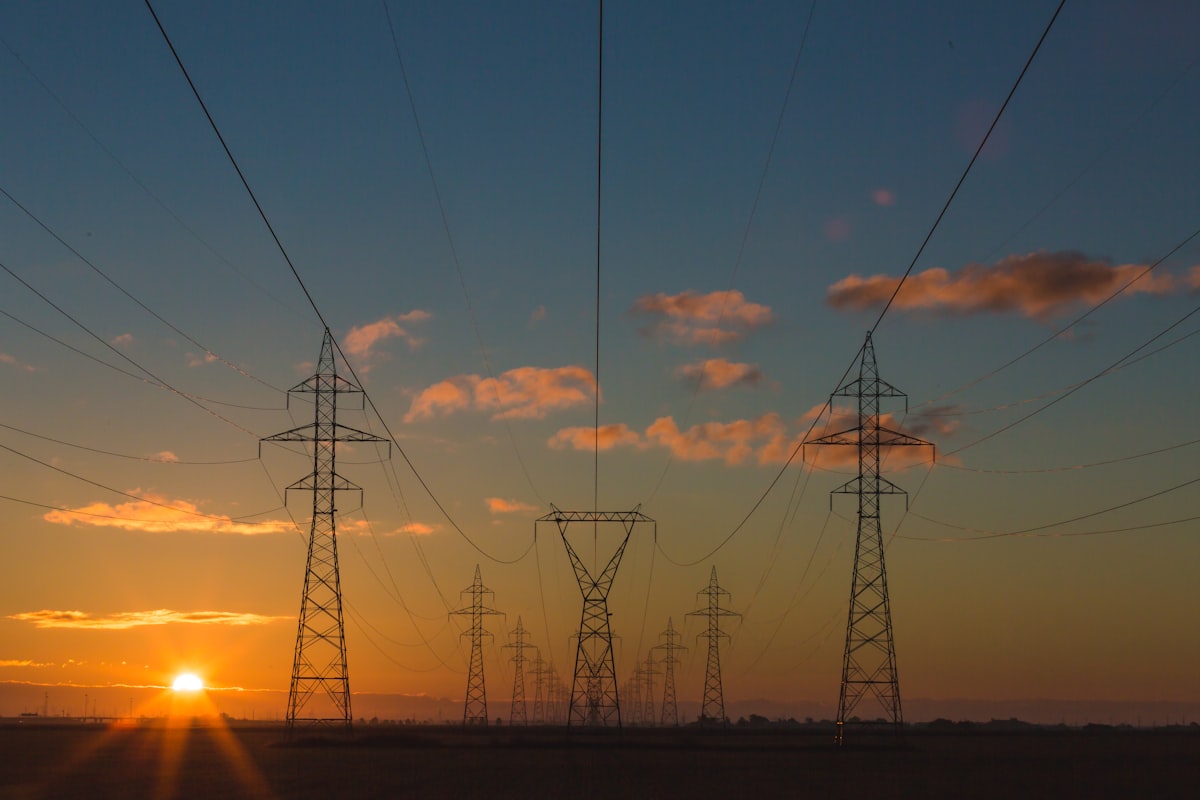
Envision says an 800-volt direct current (800V DC) power system is now running live AI computing workloads at its Galaxy data center campus in Ulanqab, Inner Mongolia. The company announced on November 2, 2026 that the system carries power from the medium-voltage grid connection all the way to the server rack, and it calls this the world's first commercial deployment of an integrated 800V DC system in a large-scale AI data center.
The claim matters because the AI industry has been preparing for exactly this shift. Nvidia has said it wants 800V DC power in place to support 1-megawatt server racks starting in 2027, and every operator planning a new AI campus has to decide how far to go with it. A live site running real workloads gives the rest of the industry something concrete to look at, even if many of the key numbers are still undisclosed.
Key facts at a glance
- What: an integrated 800V DC system combining solid-state transformers, battery storage and DC/DC equipment, coordinated by Envision's Dubhe Controller.
- Where: the Galaxy AI data center campus in Ulanqab, China, which began operating in August 2026.
- Input: 10 kV medium-voltage AC converted directly to an 800V DC bus.
- Planned scale: 3 GW of capacity and up to one million AI accelerators at full build-out, with more than 80% of power planned to come from direct renewable connections.
- Not disclosed: current operating capacity, live computing load, number of connected accelerators, or measured efficiency savings.
Why AI data centers are moving to 800V DC
Today's AI racks typically distribute power inside the rack at 54 volts DC. That design was built for racks measured in kilowatts, and Nvidia has said it starts to hit physical limits once racks exceed about 200 kW. The company's own numbers show the problem: running a single 1 MW rack at 54V would need up to 200 kg of copper busbar, and the power shelves would eat up to 64 rack units of space in its upcoming Kyber systems, leaving little room for computing.
Nvidia's answer is to raise the voltage. Under its 800V DC architecture, grid power at 13.8 kV AC is converted to 800V DC once, at the edge of the facility, instead of going through several AC-to-DC and DC-to-DC stages. Nvidia says moving from 415V AC to 800V DC lets the same conductor size carry 85% more power and cuts copper needs by 45%.
The company also claims up to 5% better end-to-end power efficiency, up to 70% lower maintenance costs from fewer failed power supply units, and up to 30% lower total cost of ownership. Nvidia has said full-scale production of 800V DC data centers will line up with its Kyber rack-scale systems in 2027. Its list of partners includes Eaton, Schneider Electric, Vertiv, Delta and a long roster of power chip makers.
What Envision says is running in Ulanqab
Envision's system has three main layers. Solid-state transformers take 10 kV medium-voltage AC and turn it directly into an 800V DC bus. A conventional site would use a separate transformer and rectifier for that job. Battery energy storage sits on the same DC bus and provides both second-scale power support and backup measured in minutes. DC/DC equipment then adjusts the voltage for the computing hardware.
Tying it together is the Dubhe Controller, which the company says runs alongside its Dubhe Energy Foundation Model. Envision says the controller coordinates the transformers and batteries at millisecond speed so that sudden swings in GPU power draw are absorbed locally rather than pushed back onto the grid.
"AI data centers need power systems that coordinate renewable energy, energy storage, and the grid to meet computing demand," said Kevin Huang, Senior Vice President of Envision Energy and President of Energy Storage and AIDC Power Systems. He described the live deployment as a step in turning power-compute coordination "from a strategic vision into an operational reality."
The hardware behind it
Envision first showed the building blocks earlier this year. At Intersolar Europe in 2026, the company's battery storage CTO, Kotub Uddin, described its 2.5 MW solid-state transformer, a unit that accepts 10 kV or 13.8 kV AC and outputs 800V DC. He said it merges voltage transformation and power conversion into one digitally controlled platform. Uddin said the design can cut the electrical footprint by up to 50% and supports system availability of up to 99.999%.
He also described an 800V DC battery system for AI data centers. The lithium iron phosphate version supplies up to 2.5 MW for two hours or more, and a sodium-ion option charges and discharges within minutes to smooth rapid load changes. Uddin said Envision targets more than a 30% improvement in tokens produced per kilowatt.
The Galaxy campus and the bigger plan
The Ulanqab site is the flagship of a larger push. Envision commissioned the Galaxy campus on August 6, 2026, built around a 120,000-square-meter AI supercomputing facility. At the time the company said the campus was designed to scale past 2 GW. The November 2 announcement puts the planned capacity at 3 GW.
At full build-out, Envision says, the campus is designed to run up to one million AI accelerators in parallel. In August, Ricky Zheng, General Manager of Envision's AI data center business, said the facility could deliver up to ten times more compute output per square meter than conventional data centers.
Envision wants to repeat the model through what it calls Mission Gobi. The initiative targets 5 GW of green AI data center capacity in desert regions around the world by 2030. The pitch is simple: put compute where cheap renewable power is plentiful, and use storage and fast controls to keep supply steady.
What it means for you
For most readers in the US, UK, Canada and Australia, this deployment will not change anything tomorrow. It does affect how AI capacity gets built, and that eventually shows up in price and availability.
- Data center and facilities teams: 800V DC is moving from slideware to live sites. If you are specifying power for AI halls that will open in 2027 or later, ask vendors whether their equipment supports an 800V DC bus, how they handle protection and fault detection, and what training your electricians will need.
- Cloud and AI buyers: power is now one of the biggest limits on new AI capacity. Designs that pack more GPUs into the same space and use less copper could lower build costs, though nobody has yet shown how much of that reaches customer prices.
- Investors and policy watchers: the race over AI infrastructure now covers power electronics as well as chips. Utilities, transformer makers and battery suppliers are all part of the AI build-out.
The caveats
Envision's "world's first" label is the company's own description and has not been independently verified. The company has also not said how much capacity is live today, how many accelerators are connected, or what efficiency gains it has measured. Its stated benefits, such as lower infrastructure cost, less cabling and less copper, are described as expected advantages rather than reported results.
Nvidia itself has flagged open problems. In its architecture paper, the company said facility-level 800V DC introduces new challenges in safety, standards and workforce training. It also said fault detection and serviceability in DC systems are still areas that need innovation. It noted that it and its partners are still studying the cost and safety trade-offs of traditional transformer-based designs against solid-state transformers like Envision's.
What happens next
The next test is disclosure. Watch for Envision to publish operating data from Ulanqab, such as live load, uptime and measured conversion efficiency, which would turn a marketing milestone into an engineering reference.
The wider calendar is set by Nvidia's 2027 target for Kyber racks and 1 MW-class power. Between now and then, expect more announcements from power vendors and operators about 800V DC pilots. Expect standards work on DC protection and safety too.
Conclusion
Envision has put a large AI campus on the same path Nvidia has laid out for the industry, and it says the system is already carrying real workloads. The details that would let outsiders judge it are still missing, so treat this as an early signal rather than proof.
Takeaways:
- If you plan AI facilities for 2027 and beyond, make 800V DC readiness an explicit requirement in vendor talks now.
- Ask any provider claiming 800V DC gains for measured numbers: efficiency, availability and live load, not design targets.
- Budget for safety training and new protection equipment, which Nvidia itself lists as open challenges.
- Track power and storage suppliers alongside chipmakers when you assess who can deliver AI capacity on time.